


Professional Home EV Charger Installation Services
Electric vehicles are everywhere, and charging at home beats hunting for public stations every single time. ResQmedics installs Level 2 EV chargers that fully charge your vehicle overnight, so you wake up ready to go without planning trips around charging stops. Whether you just bought your first EV or you're tired of slow charging from regular outlets, we'll get you set up with a proper home charging station that's safe, fast, and convenient.
Ready to charge at home? Call us at 941-216-7000 or message us online - let's get your EV charger installed.
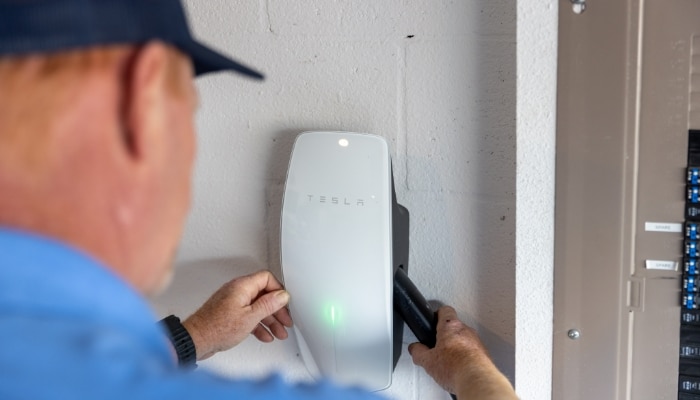
What's Involved In EV Charger Installation?
Installing EV chargers isn't as simple as mounting a box and plugging it in; proper installation requires electrical expertise to ensure safe and reliable operation for years.
- Electrical Load Assessment: We calculate your panel's current load and available capacity, determining whether your existing service can handle the additional 40-50 amp circuit EV chargers require.
- Dedicated Circuit Installation: EV chargers need their own dedicated 240-volt circuit with appropriately sized wire running from your panel to the charging location without sharing capacity.
- Proper Circuit Protection: Installing correct amperage breakers rated for your specific charger and wire size protects against overloads while allowing maximum safe charging speeds.
- Secure Charger Mounting: We mount chargers to walls, posts, or pedestals, ensuring secure installation that won't shift or come loose despite daily plugging and unplugging.
- Weatherproofing for Outdoor Installations: Most chargers are installed outdoors, requiring proper conduit, weather-resistant connections, and appropriate enclosures protecting against Florida's rain, humidity, and heat.
- Network Configuration if Applicable: Smart chargers with WiFi connectivity, scheduling features, and energy monitoring get configured and connected to your network during installation.
How Do I Choose Between Hardwired And Plug-In EV Chargers?
Both installation types work well, but each has advantages depending on your specific situation and preferences. Understanding the differences helps you make the right choice.
- Hardwired Chargers Are Permanent: These units connect directly to your electrical system without plugs, providing clean installations that can't accidentally disconnect but require electricians to relocate.
- Plug-In Chargers Offer Flexibility: Units using NEMA 14-50 outlets (like RV plugs) can unplug for travel, replacement, or relocation, though the outlet itself remains permanently installed.
- Hardwired Allows Slightly Higher Power: Some hardwired installations support marginally higher amperage than plug-in models, though for most residential applications, the difference is negligible.
- Plug-In Installation May Cost Less: If you already have appropriate outlets installed, plug-in chargers eliminate hardwiring labor, though most homes need outlet installation anyway.
- Hardwired Looks Cleaner: Without visible plugs and outlets, hardwired installations appear more integrated and finished, which some homeowners prefer aesthetically.
- We Recommend Based On Your Needs: During consultations, we discuss your priorities regarding portability, aesthetics, and budget, recommending installation types that match your specific situation.
EV Charger FAQs
Most EV charger installations complete in 4-6 hours during a single day. Timeline depends on distance from your panel to charging location, whether panel modifications are needed, and installation complexity. We schedule installations at your convenience and provide realistic timeframes during consultations based on your specific situation.
Absolutely. EV chargers work perfectly with solar panel systems - you can even charge your vehicle using solar-generated electricity during daytime hours. Some smart chargers integrate with solar systems, optimizing charging to use solar power when available. We coordinate with your solar setup ensuring proper electrical configuration.
Yes, though less than you might think. Typical EVs add $30-$60 monthly to electric bills depending on driving habits and local rates - still dramatically cheaper than gasoline. Charging during off-peak hours if your utility offers time-of-use rates reduces costs further. Smart chargers help monitor consumption and optimize charging schedules minimizing electrical expenses.
What Size Circuit Does My EV Charger Need?
Circuit sizing directly affects charging speed and installation costs. Understanding amperage requirements helps you make informed decisions about your charging setup.
- Most Home Chargers Use 40-50 Amps: Level 2 residential EV chargers typically require dedicated 40 or 50-amp circuits providing adequate charging speed without excessive installation costs.
- Higher Amperage Charges Faster: 48-amp chargers (on 60-amp circuits) charge faster than 32-amp models (on 40-amp circuits), though both fully charge vehicles overnight for most daily driving.
- Your Vehicle's Onboard Charger Limits Speed: Even with high-amperage chargers installed, your vehicle's internal charging system limits actual charging rates - check your EV's specifications before oversizing circuits.
- Wire Sizing Affects Installation Costs: Higher amperage circuits require larger gauge wire, costing more, especially for long runs from panels to charging locations in garages or driveways.
- Panel Capacity May Limit Options: Some older panels lack capacity for 60-amp circuits without upgrades - we assess your panel during consultations, recommending appropriate circuit sizing.
- Future-Proofing Makes Sense: Installing slightly higher capacity than currently needed accommodates future EVs with faster charging capabilities without requiring complete reinstallation later.
How Much Does EV Charger Installation Cost In Sarasota?
Installation costs vary based on several factors, though understanding typical pricing helps you budget appropriately for home charging setup.
- Charger Hardware Costs $400-$1,200: The charging unit itself ranges from basic models to premium chargers with smart features, weather resistance, and higher power ratings.
- Installation Labor Runs $500-$1,500: Professional installation, including dedicated circuit, proper wiring, breaker installation, and charger mounting, typically falls within this range.
- Distance from Panel Affects Price: Longer wire runs from your electrical panel to the charging location increase material and labor costs due to additional conduit and wire required.
- Panel Upgrades Add Expense: If your panel lacks capacity or available circuit spaces for EV chargers, panel upgrades add $1,500-$3,000 to total project costs.
- Permits and Inspections Required: Sarasota County requires permits for EV charger installations, adding fees but ensuring work meets codes and passes inspection.
- Total Investment: Typically $1,000-$3,000: Most complete EV charger installations, including equipment, labor, permits, and inspections, cost between these amounts for standard residential setups.
Charge Your EV At Home The Right Way
Home EV charging transforms electric vehicle ownership from occasionally inconvenient to genuinely effortless. You plug in when you get home, and you're fully charged every morning without thinking about it. Proper installation ensures fast, safe, reliable charging for years without issues - it's worth doing right the first time.
Stop depending on public charging stations. Call us at 941-216-7000 or contact us online - let's get your home EV charger installed today!