


Professional Smoke Detector Installation & Replacement
Smoke detectors are literally lifesavers - they give you and your family precious minutes to escape when fire breaks out. ResQmedics installs hard-wired interconnected smoke detector systems that provide comprehensive protection throughout your home. Whether you're upgrading from battery-powered units, replacing outdated detectors, or need installations for new construction, we'll make sure every area of your home has proper coverage that actually works when it matters most.
Need smoke detectors installed or replaced? Call us at 941-216-7000 or message us online - let's protect your family.
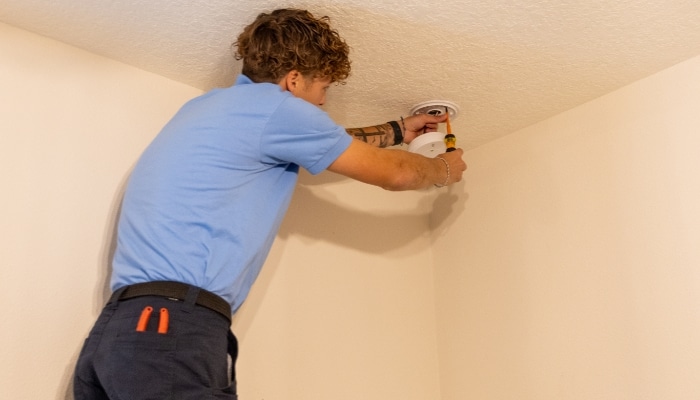
Where Should Smoke Detectors Be Installed In My Home?
Proper smoke detector placement makes the difference between early warning and delayed detection. Fire codes specify exact requirements ensuring comprehensive coverage throughout your home.
- Every Bedroom Needs One: Smoke detectors must be installed inside every bedroom, regardless of size, providing immediate alerting if fire starts while people are sleeping.
- Outside All Sleeping Areas: Hallways or areas immediately outside bedrooms require detectors so smoke traveling toward sleeping areas triggers alarms before reaching occupants.
- Every Level of Your Home: Basements, main floors, and upper levels all need smoke detectors, even if those areas don't contain bedrooms, ensuring whole-home coverage.
- Kitchen and Garage Considerations: Detectors near kitchens should be positioned at least 10 feet from cooking appliances to minimize false alarms while maintaining protection.
- High Ceilings Require Special Placement: Vaulted ceilings, cathedral ceilings, or rooms with high peaks need detectors positioned according to specific code requirements for proper smoke detection.
- Avoid Dead Air Spaces: Corners, ceiling-wall junctions, and areas with poor air circulation should be avoided - smoke needs to reach detectors quickly for effective warning.
What's The Difference Between Hardwired And Battery-Powered Smoke Detectors?
Understanding smoke detector types helps you make informed decisions about protecting your home. Both options have advantages, but codes increasingly require hardwired systems for good reasons.
- Hardwired Detectors Use House Power: These units connect directly to your home's electrical system, eliminating battery replacement concerns and providing reliable, continuous power.
- Battery Backup Included: Quality hardwired detectors include backup batteries, maintaining protection during power outages, combining the reliability of both power sources.
- Interconnected Operation: Hardwired systems connect all detectors together - when one detects smoke, every detector in your home sounds simultaneously for maximum warning.
- Battery-Only Units Work Independently: Stand-alone battery detectors only sound locally where smoke is detected, potentially delaying awareness in other areas of your home.
- Code Requirements Favor Hardwired: New construction and major renovations typically require hardwired interconnected smoke detectors meeting current fire safety codes and standards.
- Installation Requires Electricians: Hardwired smoke detector installation involves electrical wiring requiring licensed electricians, while battery units homeowners can install themselves.
Smoke Detector FAQs
Current Florida building codes require hard-wired interconnected smoke detectors for new construction and substantial renovations. Existing homes can use battery-powered units legally, but hardwired systems provide superior protection through whole-home alerting. If you're updating detectors anyway, hardwired installation offers better long-term reliability and compliance with modern safety standards.
False alarms typically stem from several causes: detectors too close to kitchens or bathrooms where steam triggers them, accumulated dust or insects inside sensor chambers, aging sensors becoming oversensitive, or high humidity levels. We can relocate problematic detectors, clean sensors, or replace aging units, resolving nuisance alarms while maintaining protection.
Hardwired smoke detector installation typically costs $150-$250 per detector, including the device, wiring, and labor. Whole-home installations with multiple detectors often receive per-unit discounts. Homes needing extensive wiring updates or difficult access locations may cost more. We provide free estimates detailing exactly what your specific home requires for complete code-compliant coverage.
How Often Should Smoke Detectors Be Replaced?
Smoke detectors don't last forever - sensors deteriorate over time, reducing effectiveness until they eventually fail. Knowing replacement schedules keeps your protection reliable.
- Replace Every 10 Years: Smoke detectors have approximately 10-year lifespans regardless of how well they seem to work - sensor degradation happens whether you notice or not.
- Check Manufacturing Dates: Every detector has a manufacturing date printed on the back - calculate replacement timing from that date, not installation date.
- Chirping Indicates Problems: Persistent chirping after battery replacement usually signals the detector itself is failing and requires replacement rather than just new batteries.
- Test Monthly for Function: Push test buttons monthly, verifying detectors sound properly - non-functional detectors need immediate replacement regardless of age.
- Update to Current Technology: Older ionization-only detectors should be replaced with dual-sensor or photoelectric models providing better detection across different fire types.
- Code Changes May Require Updates: Building codes evolve, requiring newer detector types with additional features - selling homes often necessitates updating to current standards.
Protect Your Family With Properly Installed Smoke Detectors
Smoke detectors are too important to leave to chance - proper placement, reliable power, and interconnected operation make genuine differences in fire emergencies. Whether you're installing new detectors, replacing outdated units, or upgrading to hardwired systems, we'll ensure every area of your home has protection that works when seconds count.
Don't wait for detector failures or code violations. Call us at 941-216-7000 or contact us online right now - let's get your home protected properly.