


Expert Circuit Breaker Repair, Replacement & Installation
Circuit breakers are your home's first line of defense against electrical overloads and fires, but they don't last forever. When breakers start tripping constantly, won't reset, or just feel hot to the touch, it's time to get them checked out. ResQmedics handles everything from single breaker replacements to complete panel upgrades when your circuits need more protection than your current setup can deliver.
Circuit breaker acting up? Call us at 941-216-7000 or message us online - we'll figure out what's going on.
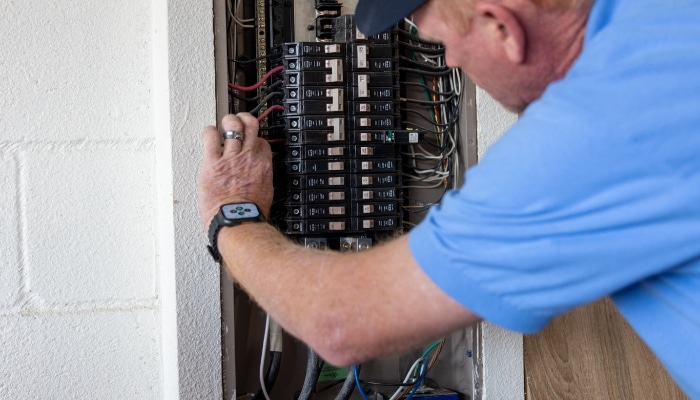
Why Do Circuit Breakers Keep Tripping?
Breakers trip for specific reasons, and understanding what's causing the problem helps us fix it properly instead of just resetting it over and over, hoping it stops.
- Overloaded Circuits: Running too many devices on one circuit draws more current than the breaker is rated for, causing it to trip as designed to prevent overheating.
- Short Circuits: When hot wires contact neutral wires or ground, massive current surges instantly trip breakers protecting your home from fire hazards.
- Ground Faults: Current leaking to ground through damaged insulation, moisture, or faulty appliances triggers breakers, especially GFCI and AFCI types designed for this protection.
- Failing Breakers: Breakers wear out after years of cycling on and off, losing their ability to handle rated loads and tripping at lower currents than they should.
- Loose Connections: Poor connections at the breaker, panel bus bars, or circuit wiring create resistance, generate heat, and cause nuisance tripping without actual overloads.
- Faulty Appliances: Defective equipment with internal shorts or ground faults draws abnormal current, tripping breakers protecting the circuit they're plugged into.
How Do I Know If A Circuit Breaker Needs Replacing?
Breakers don't announce their retirement, but they do show signs that it's time for replacement. Catching these indicators prevents problems before they become emergencies.
- Won't Stay Reset: When breakers trip and immediately trip again when you try resetting them, the breaker itself has failed and needs replacement.
- Feels Hot to Touch: Circuit breakers should stay cool during normal operation - heat indicates failing internal components or dangerous loose connections requiring immediate attention.
- Physical Damage Visible: Cracks, burn marks, melted plastic, or corrosion on breaker bodies indicate serious problems that make replacement mandatory, not optional.
- Trips at Lower Loads: If a 20-amp breaker trips running devices drawing only 15 amps, it's weakened and no longer providing proper protection.
- Age Over 15-20 Years: Breakers have limited lifespans - older ones lose reliability even without obvious failure signs, making replacement smart preventive maintenance.
- Different Brand than Panel: Breakers must match your panel's manufacturer - incompatible breakers don't fit properly, create hazards, and void listings and warranties.
Circuit Breaker FAQs
Single breaker replacements typically run $150-$300, depending on breaker type. Standard breakers cost less than GFCI or AFCI breakers, which have more sophisticated protection. If your panel needs multiple breakers replaced or the panel itself is outdated, we'll discuss whether complete panel upgrades make more sense economically.
We strongly advise against DIY breaker replacement. Panel work involves exposed bus bars carrying 120-240 volts that remain energized even with the main breaker off. One mistake causes serious injury or death. Licensed electricians have training, tools, and experience to work safely inside panels - it's not worth the risk.
Quality circuit breakers generally last 15-20 years with normal use, though frequent tripping, high loads, or environmental factors like humidity can shorten lifespans. Breakers in older panels or from manufacturers with known defects may need earlier replacement. Regular electrical inspections help identify breakers approaching end-of-life before failures occur.
What's The Difference Between Standard, GFCI, And AFCI Breakers?
Different breaker types serve different protective purposes. Understanding these differences helps you know what protection your home actually has and needs.
- Standard Breakers Prevent Overloads: Basic thermal-magnetic breakers trip when circuits draw excessive current, protecting wiring from overheating but not people from shocks.
- GFCI Breakers Prevent Electrocution: Ground fault circuit interrupters detect current imbalances indicating leakage to ground, tripping instantly to prevent potentially fatal shocks.
- AFCI Breakers Prevent Fires: Arc fault circuit interrupters detect dangerous arcing from damaged wires, loose connections, or failing equipment that causes electrical fires.
- GFCI Required In Wet Areas: Bathrooms, kitchens, garages, outdoor outlets, and other locations near water require GFCI protection by electrical code for safety.
- AFCI Required In Living Areas: Bedrooms, living rooms, dining rooms, and similar spaces need AFCI protection in modern homes to prevent arc-related fires.
- Combination Breakers Offer Both: Some breakers provide both GFCI and AFCI protection simultaneously, meeting multiple code requirements with a single device.
Keep Your Circuits Protected With Reliable Breakers
Circuit breakers protect everything in your home - your wiring, your appliances, and most importantly, your family. When they start failing, or you're dealing with constant trips, it's time to get professional help. We'll diagnose what's actually wrong and fix it properly so your electrical system works the way it should.
Circuit breaker problems won't fix themselves. Call us at 941-216-7000 or get in touch online today - let's get your circuits protected properly.